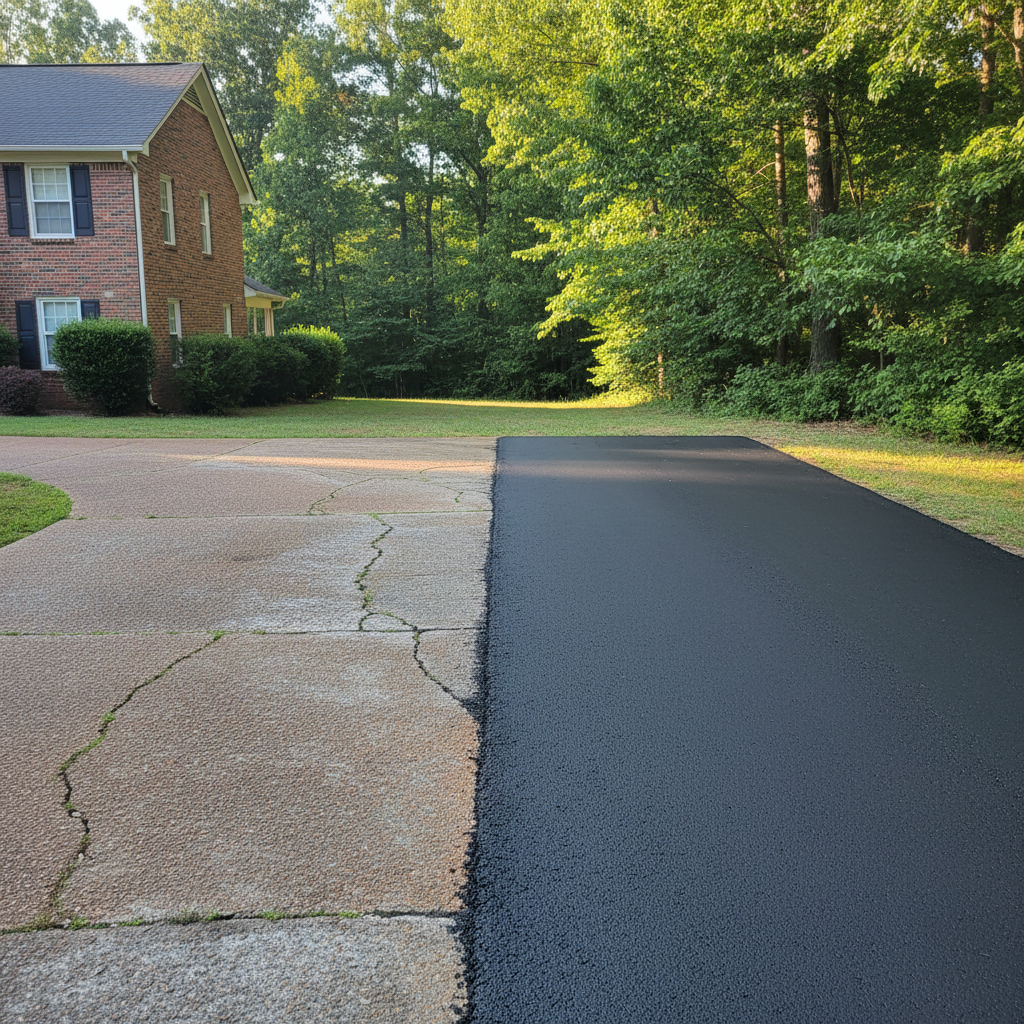
Your asphalt driveway or private road in Gaston is showing its age, huh? Maybe it's faded, got some small cracks, or just isn't looking as sharp as it used to. When you're looking at options to fix it up, you'll usually hear about two main routes: sealcoating or an asphalt overlay. Both have their place, sure, but they're definitely not the same thing. As someone who's been laying and fixing asphalt around here for years, I can tell you there's a big difference in what you get for your money and how long it'll last.
Sealcoating: The Quick Refresh
Let's start with sealcoating. Think of this as a protective sunscreen for your asphalt, but it also makes it look new again. We're talking about applying a thin liquid layer over your existing pavement. It's usually a blend of asphalt emulsion, water, aggregate, and some other additives.
Cost & What It Does
Price-wise, sealcoating is your most affordable option, hands down. It's a fraction of the cost of an overlay. What you're paying for is protection from the elements – UV rays, water, oil spills, and general wear and tear. It helps prevent those tiny hairline cracks from growing into bigger problems. Plus, it brings back that rich, dark black color, making your property look a lot better instantly. It's a great option for preventative maintenance, especially if your asphalt is still in pretty good shape overall, maybe just a few years old.
Durability & Maintenance
Don't expect miracles, though. Sealcoating isn't a structural repair. It won't fix potholes or deep cracks; it's a surface treatment. You'll typically need to reapply it every 2-4 years, depending on traffic, how well the initial job was done, and our lovely Gaston weather cycles – those hot, humid summers and occasional freezes can really take a toll. If you've got a lot of heavy vehicles or commercial traffic, you might be on the shorter end of that spectrum.
Asphalt Overlay: The Deeper Fix
Now, an asphalt overlay is a whole different beast. This isn't just a paint job; it's adding a brand new layer of asphalt on top of your existing, but still structurally sound, pavement. Before we even think about laying down new asphalt, we'll usually address any significant cracks or unstable areas in the old surface. Sometimes that means milling down high spots or fixing soft spots.
Cost & What It Does
An overlay is going to cost you more upfront than sealcoating, no question. We're talking about more materials, more labor, and more equipment. But what you get is essentially a new surface. It significantly improves the structural integrity of your pavement, smooths out minor irregularities, and gives you a fresh, durable driving surface. It's ideal when your asphalt has more widespread cracking, minor rutting, or just looks generally worn out, but the base underneath is still solid.
Durability & Maintenance
The durability of an overlay is much greater than sealcoating. You're looking at 8-15 years, sometimes even longer, before you'd need to consider another major repair – assuming it's maintained properly, of course. You'll still want to sealcoat an overlay every few years to protect that new surface and extend its life even further. It's a bigger investment, but it pays off in longevity and a much better-looking, smoother surface.
Which One Should You Choose for Your Gaston Property?
So, how do you decide? It really comes down to the condition of your existing asphalt and your budget.
- If your asphalt is relatively new (1-5 years old), has only minor fading, and just a few small cracks: Sealcoating is probably your best bet. It's a cost-effective way to protect your investment and keep it looking good. Think of it as routine maintenance.
- If your asphalt is older (6-15+ years), has widespread cracking (not just hairline), some minor potholes, or significant fading: An asphalt overlay is likely the more appropriate solution. It addresses underlying issues better and gives you a much longer-lasting repair. For properties around places like the Catawba River, where soil conditions can sometimes be a bit more expansive, a solid overlay can offer better long-term stability against ground movement.
- If your asphalt is completely falling apart, has major potholes, alligator cracking everywhere, or a failing base: Neither of these might be enough. You're probably looking at a full remove and replace, which is the most expensive option but sometimes the only way to truly fix a severely deteriorated pavement.
My advice? Don't guess. Have a professional come out and take a look. We can assess the actual condition of your pavement, talk through your budget, and recommend the best approach for your specific situation. At Pacific Asphalt Solutions, we've seen it all, and we'll give you an honest assessment so you can make an informed decision that'll last.